

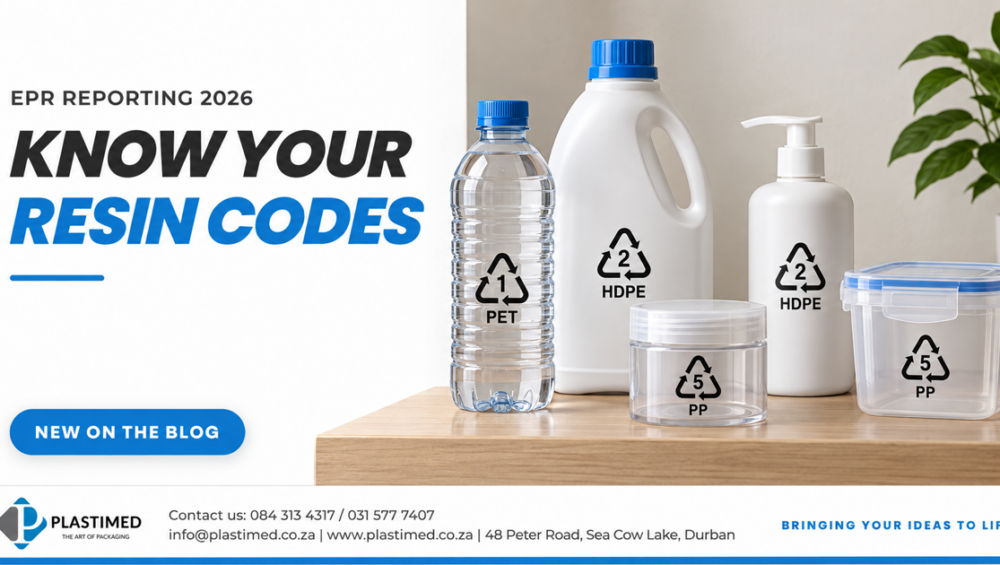
Five years ago, “is it recyclable?” was a marketing question. Today it is a compliance question, and it lands on procurement’s desk.
South Africa’s Extended Producer Responsibility (EPR) regulations make producers responsible for the packaging they place on the market. In practice, that means your company reports packaging volumes and material data through a Producer Responsibility Organisation (PRO), and the data quality of that report depends on one thing: whether your suppliers can tell you exactly what their packaging is made of.
What you are actually required to know
For every packaging component you buy, your EPR reporting needs the material identity (which polymer, identified by resin code), the weight per unit, and increasingly the recycled-content percentage. Multiply across every bottle, jar, closure, bucket and flexible pack you purchase, and packaging data becomes a real dataset your business must maintain.
The resin codes that matter in rigid packaging
The number in the chasing-arrows triangle is not a recyclability score. It identifies the polymer.
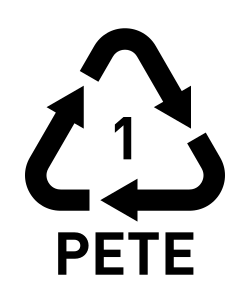 PET (code 1): bottles and jars with excellent clarity. One of the most widely recycled polymers in South Africa, with an established collection and recycling value chain.
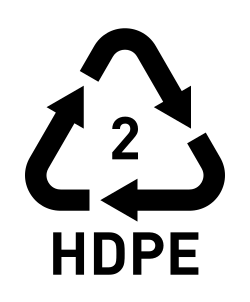 HDPE (code 2): the workhorse for buckets, jerry cans and closures. Chemical resistance, toughness, and a strong local recycling stream.
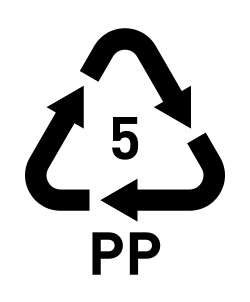 PP (code 5): tubs, closures and atomiser components. Heat resistance and living-hinge performance, with a growing recycling stream.
The practical procurement question is not “which number is best?” but “does the format I am buying have a real end-of-life pathway in South Africa, and can my supplier document it?”
Why mono-material design is becoming a procurement preference
A PET bottle with a PP closure is two recycling streams in one product; recyclers separate them. A multi-layer laminate that mixes films may have no viable local stream at all. Buyers are increasingly specifying mono-material formats where the application allows, because it simplifies both the recycling pathway and the EPR report. When you next review a packaging spec, ask whether the format can be simplified to fewer materials without compromising the product. Often it can.
What to demand from your supplier
Your packaging supplier should provide, without being chased: a spec sheet per product carrying the resin code; material data including recycled-content percentage where applicable; and clarity on their own PRO registration status. If that data arrives late, incomplete, or only after repeated requests, your EPR report inherits the gap, and the compliance risk is yours, not theirs.
This is a genuine reason the sourcing conversation is shifting local. Sitting across the table from a Durban manufacturer and walking the actual production floor makes material verification a conversation, not a six-week email chain with an overseas trading desk.
Recyclability as a business position
At Plastimed, recyclability is not a compliance afterthought; promoting recyclability is part of why the business exists. Plastic packaging done properly is a circular-economy material: locally manufactured, locally collected, locally reprocessed. The producers who win the next five years will be the ones who can prove that loop with data.
Take action
Pull your five highest-volume packaging SKUs and check: do you have the resin code, unit weight and recycled-content figure on file for each? If not, that is your starting point.
Then talk to us. Plastimed manufactures rigid plastic packaging in Durban with full spec-sheet documentation per product. Ask us the resin-code question and see how a professional supplier answers: info@plastimed.co.za, 084 313 4317, or www.plastimed.co.za.


